

Volodymyr Monomakh was born a year before the death of Yaroslav “the Wise.” Vsevolod, Volodymyr’s father, was Yaroslav’s youngest son. The Primary Chronicle records that Volodymyr’s mother belonged to the imperial house of Byzantium. Her and Vsevolod’s son, who became known as Volodymyr Monomakh, tells us in his autobiography that he inherited his surname from his mother. There is little doubt that she was the daughter of the Byzantine emperor Constantine IX Monomachos (1042–1055).


Monomachos, or in Latin Monomachus, is a Greek epithet meaning “he who fights alone” and “gladiator.”
In 1078, when his father obtained Kyiv, 25-year-old Monomakh was given Chernihiv, the second most important city of Kyiv Rus.
Volodymyr Monomakh in his Autobiography:
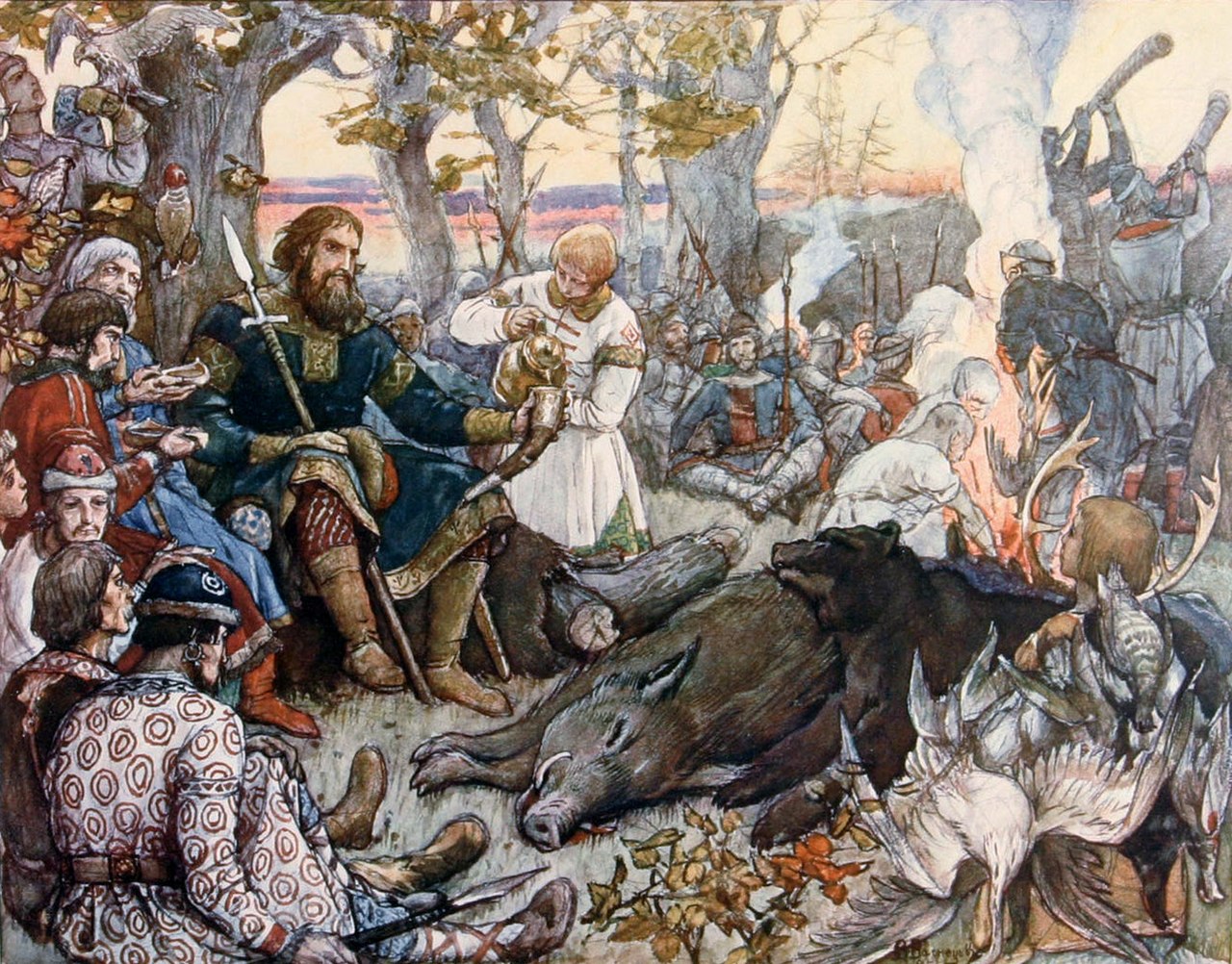
“I devoted much energy to hunting as long as I reigned in Chernihiv. Since I left Chernihiv, even up to the present time, I have made a practice of hunting a hundred times a year with all my strength, and without harm, apart from a certain hunt after bison, since I had been accustomed to chase every sort of game in my father’s company. At Chernihiv, I even bound wild horses with my bare hands or captured ten or twenty live horses with the lasso, and besides that, while riding along the Ros’ [River], I caught these same wild horses bare-handed. Two bisons tossed my horse and me on their horns, a stag once gored me, one elk stamped upon me, while another gored me, a boar once tore my sword from my thigh, a bear on one occasion bit my kneecap, and another wild beast jumped on my flank and threw my horse with me. But God preserved me unharmed.
I often fell from my horse, fractured my skull twice, and in my youth, injured my arms and legs when I did not reck of my life or spare my head.
In war and at the hunt, by night and by day, in heat and in cold, I did whatever my servant had to do, and gave myself no rest. Without relying on lieutenants or messengers, I did whatever was necessary; I looked to every disposition in my household. At the hunt, I posted the hunters, and I looked after the stables, the falcons, and the hawks. I did not allow the mighty to distress the common peasant or the poverty-stricken widow, and interested myself in the church administration and service.”
By the time he became the Grand Prince of Kyiv in 1113, he was already an administrator, military commander, and author.
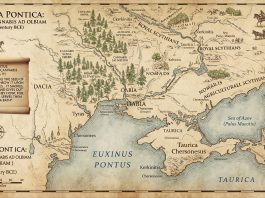
Volodymyr Monomakh’s industry and desire to do simple work, such as looking after horses himself, resemble another famous ruler whose capital was close to the Dnieper as well, but who ruled more than milennium before Monomakh. It was Scythian King Atheas.
The “Cradle of Civilisations” is so far the only book that offers new facts about the famous battle between King Atheas and Philip II of Macedon, the father of Alexander the Great.