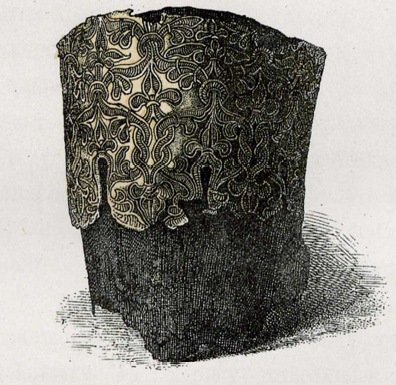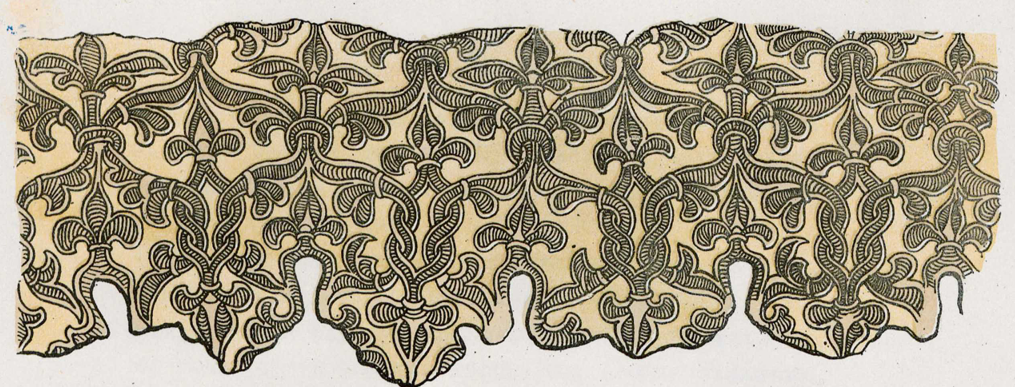
“The second bullhorn from the Black Barrow, embossed and engraved, is of a completely different nature. Its silver mount is completely covered with a floral design of massive garlands of lush branches and leaves.
The ornamentation on the second horn is identical to the ornamentation on the hilt of a sword found near the Golden Gate of Kyiv. This ornamentation finds analogies in the ornamentation of jewelry found in 10th-century graves in Bohemia and Moravia. Czech scholars see in this the influence of Kyiv Rus on Bohemia. Flat-relief embossing, an early example of which is the aurochs horn from Black Mogila, discussed above, dominated ornamental techniques in the 10th and first half of the 11th centuries.
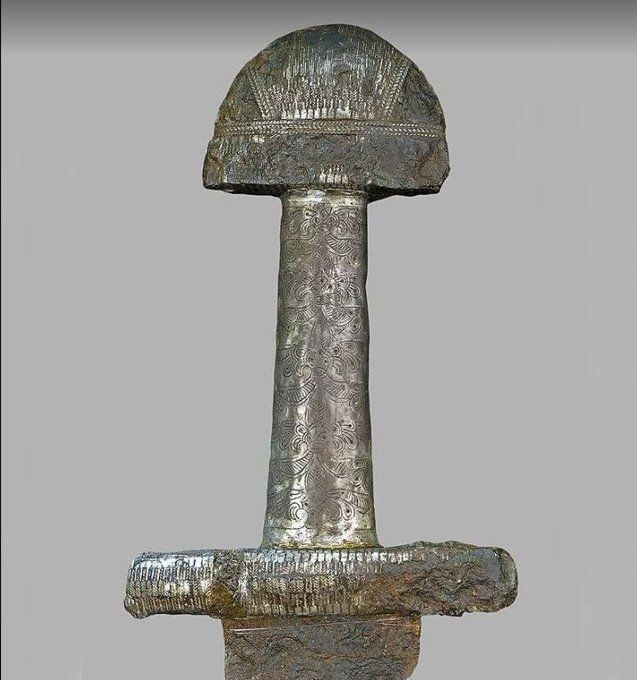
An even more complete analogy to the style and technique of the second aurochs’ horn of the Black Barrow is provided by items from squad burials of the 10th-11th centuries in Moravia, published by Červinka [Slované na Moravě, Brno, 1930].
So, on the one hand, we have Czech and Moravian jewelry from the 10th-11th centuries, made in a style alien to these regions and unknown in the west, north, or south of them. On the other hand, in Kyiv and other Kyiv Rus cities, we encounter this style on beautifully designed pieces, where the same technique is used, but the finishing is finer, more elegant, and the hand of the master is more confident.
The date of the Rus’ items may be several decades older than the Czech ones – a clear, unworn Byzantine gold coin from 948 was found in the Black Barrow. The most likely explanation for the striking similarity between Rus and Czech items is the recognition of the influence of Kyiv and Kyiv jewelry workshops on Czech jewelry production in the 10th and 11th centuries.
Serious confirmation of this view is the discovery of genuine Kyiv items in the Czech Republic. Several examples of three-bead temple rings made in Kyiv have been found in various locations in the Czech Republic. One such ring was discovered in Žalov, where buttons with a pattern imitating the ornamentation of the aurochs horn from Chernihiv were also found…
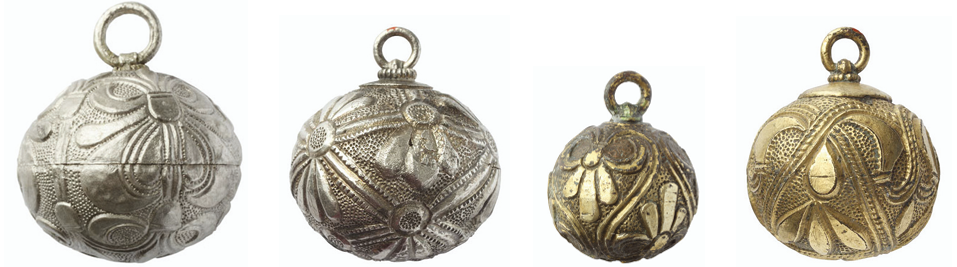
We observe a great affinity with Rus objects (the second rhyton from the Black Barrow and the hilt of a sword from Kyiv near the Golden Gate) in the ornamentation of large bronze buttons from Czech graves in Rusovice, Melník, Žalov, and Predmost na Moravě…
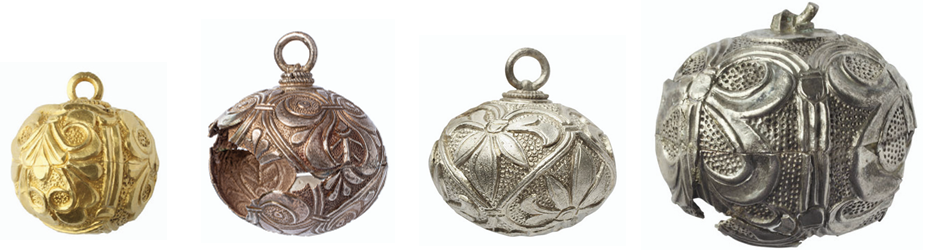
The similarity is again not limited to stylistic features, but extends to technique: both Rus and Czech items are processed with a chisel and chasing, and, in addition, are gilded. The date of these Czech objects is the same—the end of the 10th to the beginning of the 11th century. An even more complete analogy to the style and technique of the second aurochs horn from the Black Grave is provided by objects from 10th-11th-century squad burials in Moravia, published by Červinka.” (Academician B. Rybakov).
Read B. Rybakov’s analysis of another rhyton from Black Barrow.
< 10th-century Rhyton from Chernihiv Black Barrow: Local and Indo-Iranian ornamentation motifs
The book “Kyiv Rus in Heimskringla Sagas and Byzantine Texts” has little-known facts about Kyiv realm.