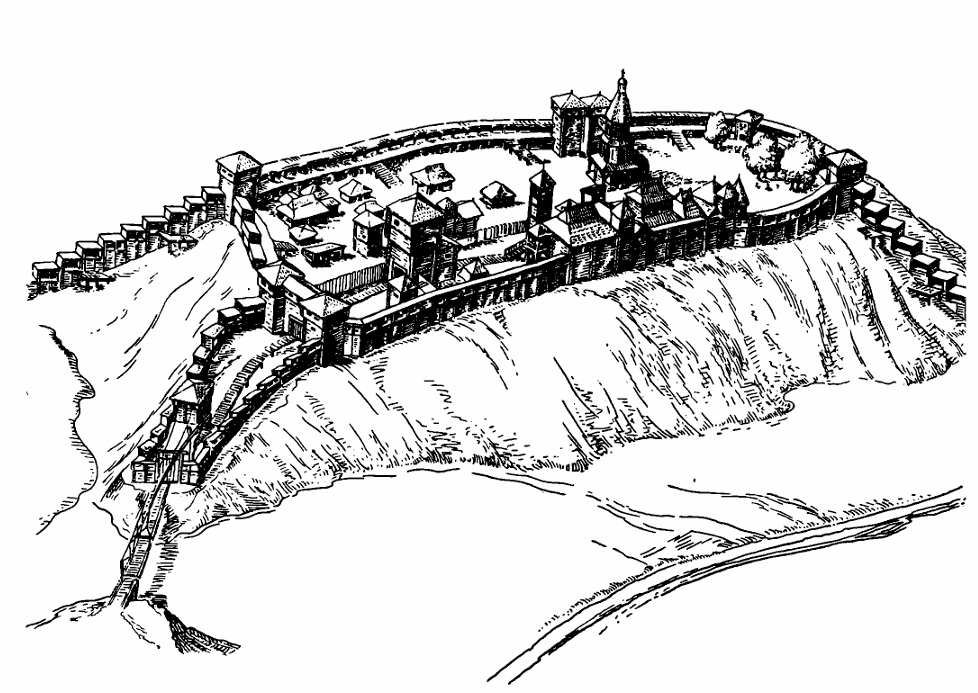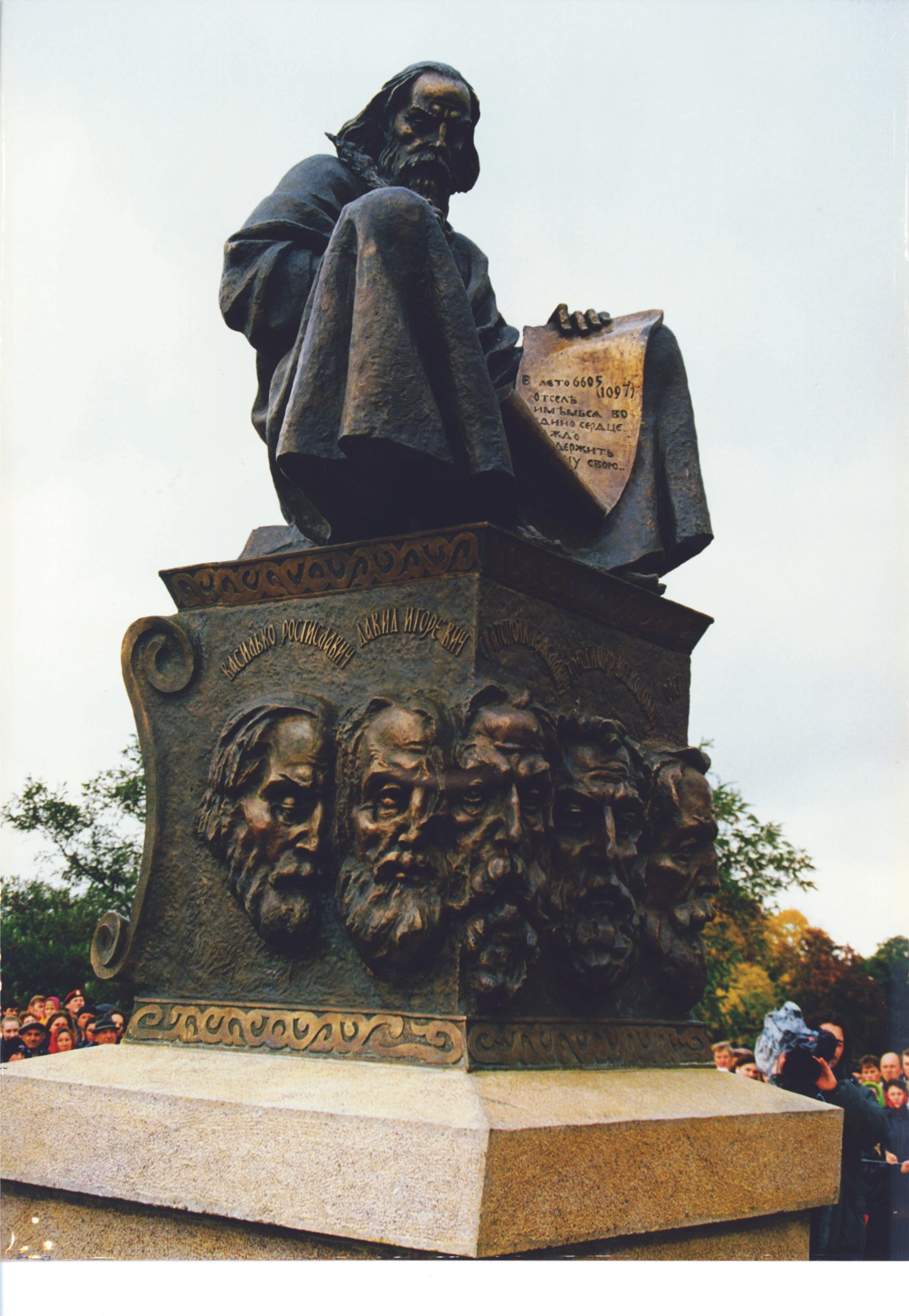
Lyubech is currently a rural settlement in Chernihiv Oblast, northern Ukraine. It is located 200 kilometers north of Kyiv, and near the border with Belarus. The Council of Lyubech is one of the best documented princely meetings in Kyiv Rus that took place in that town on October 19, 1097.
Academician B. Rybakov conducted excavations in Lyubech in 1957-1960 and wrote about the settlement:
“A Slavic settlement existed on the site of Lyubech as early as the first centuries AD. By the 9th century, a small town with wooden walls had emerged here. The court of Malko Lyubechanin, the father of Dobrynya and grandfather of Volodymyr I [the Great], must have been located somewhere nearby. On the banks of the Dnieper backwater, there was a pier where the “monoxyli” mentioned by Constantine VII [Porphyrogenitus, Byzantine Emperor] would gather… The city of Lyubech, from which Volodymyr I traced his lineage, was… the ancestral home of all Rus’ princes…
Lyubech on the Dnieper was a kind of northern gateway to inner Rus‘, and its southern gateway was Vitechiv, an important strategic base at the ford across the Dnieper [60 km south of Kyiv].
Archaeological excavations in Lyubech and Vitechiv have uncovered many interesting monuments from the 8th-12th centuries, confirming the importance of these locations. In Vitechiv, for example, a signal tower was discovered inside a 10th-century oak fortress on a high hill. Its fire was intended to warn Kyiv of the Pecheneg threat…
Volodymyr the Great
In the picturesque town of Lyubech, which guarded the approaches to the Kyiv land from the north, lived a certain Malko Lyubechanin [Malko of Lyubech] in the mid-10th century. His daughter Malusha was Princess Olga’s housekeeper, and his son Dobrynya apparently served the prince. In the epics about Dobrynya, the memory has been preserved of him being at the prince’s court as a groom.
Malusha of Lyubech became one of Svyatoslav’s concubines, and she gave birth to Volodymyr, who was later reproached for his origins for a long time… If not for a stroke of luck, the housekeeper’s son might have gotten lost in the crowd of “youths” and servants at the prince’s court.
But his uncle Dobrynya once took advantage of the fact that the prince’s legitimate sons, Yaropolk and Oleg, refused to travel to Novgorod, the distant northern province of Rus‘, and offered to send his nephew there. Thus, the young Volodymyr became prince-viceroy of a small town on Lake Ilmen…
Yaroslav the Wise
Novgorod prince [Yaroslav the Wise] stood for three months at the northern gates of inner Rus’, at Lyubech on the Dnieper, where Svyatopolk met him, and already in late autumn, Yaroslav decided to attack his brother. The Battle of Lyubech was won by the Novgorod army, Svyatopolk fled to the Pechenegs, and Yaroslav triumphantly entered Kyiv…
Volodymyr Monomakh
The events that unfolded in 1097–1099 after the Lyubech Congress are known in every detail, since Monomakh, feuding with Svyatopolk, took care to compile almost verbatim descriptions of his rival’s conspiracies, secret alliances, and bloody reprisals.” (B. Rybakov, The First Centuries of Rus’ History)
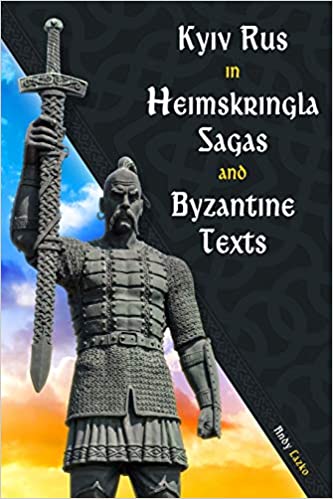
The book “Kyiv Rus in Heimskringla Sagas and Byzantine Texts” has little-known facts about the time of young Volodymyr (future The Great) in Novgorod and his interaction with the Vikings. It also shows how the Scandinavian sagas portray the story of the marriage of Yaroslav the Wise and Swedish princess Ingegerd.