

“Ancient Rus’ blacksmiths of the 10th-13th centuries fully mastered all the basic technical techniques of iron processing and determined the technical level of village forges for centuries to come. By accumulating experience and following an empirical path in search of the most advantageous and reasonable forms of tools, ancient Russian blacksmiths developed forms that also lasted for many hundreds of years…


The history of the axe is particularly interesting, the milestones for which have been outlined by the research of V. P. Goryachkin and V. A. Zheligovsky. By reconstructing the missing handles and calculating the efficiency, V. A. Zheligovsky established that the low-productivity form of the socketed late Dyakovo axe and the short-bladed axe of the 8th century (Upper Volga type) were replaced by a rational and stable form of the axe with a lowered ‘beard’ by the 10th century. This type of axe became the dominant one throughout the pre-Mongol era across a very wide area. All working axes found in Rus’ village burial mounds represent variations of this type.
The efficiency of a short-bladed axe from the 8th century is 0.76.
For Kyiv Rus’ axes with a lowered barb, it fluctuates between 0.8 and 0.973, approaching one, i.e., the maximum use of the entire force of the blow.
At the same time, the shape of the axe changed in the following directions: the blade was lengthened by pulling the beard down, the bridge between the butt and the blade became narrower (the excess margin of safety was eliminated), the lower part took the form of a regular wide arc, the gap between the end of this arc and the lower edge of the blade became smaller and smaller (again, for the same reasons of reducing excess strength). As a result, blacksmiths of the 10th-13th centuries developed a light and elegant type of axe that has survived to the present day in the Belarusian Polesie region.
It’s interesting to note that Kyiv Rus’ axe type gradually spread to neighboring areas, displacing the more primitive form. Kurgan-type axes are found in the Kama region, and they are also found in Finland…
The kurgan axes are also close in shape to the well-known axes of Canadian lumberjacks, the profile of which was determined using scientific data.” (Academician B. Rybakov)

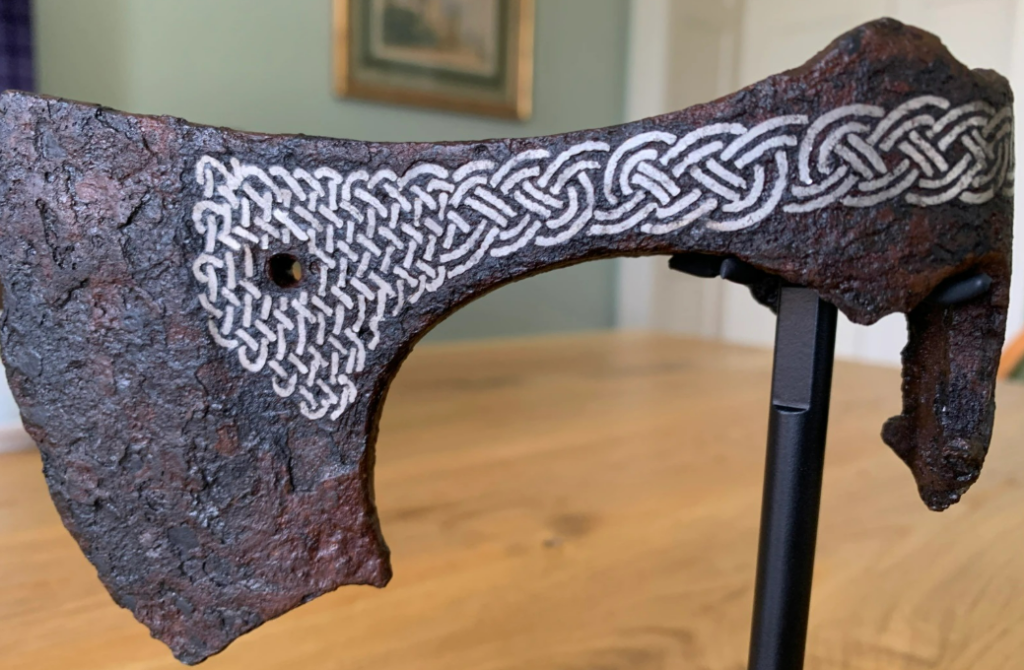
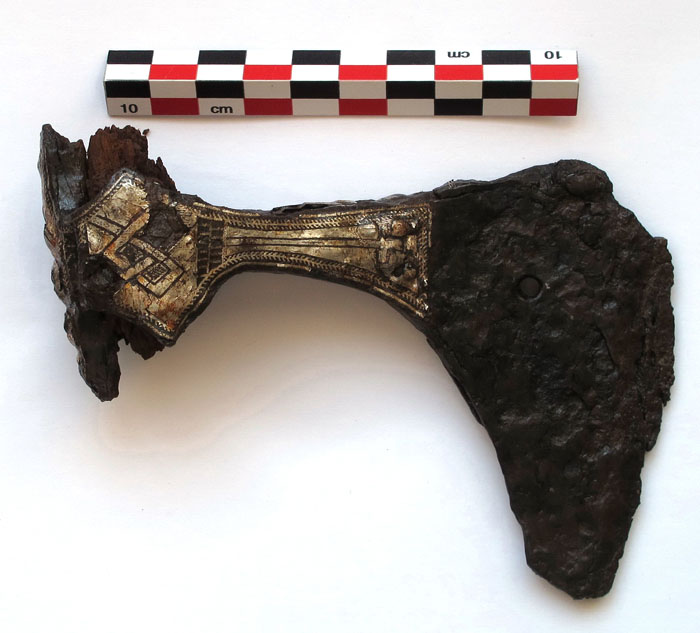
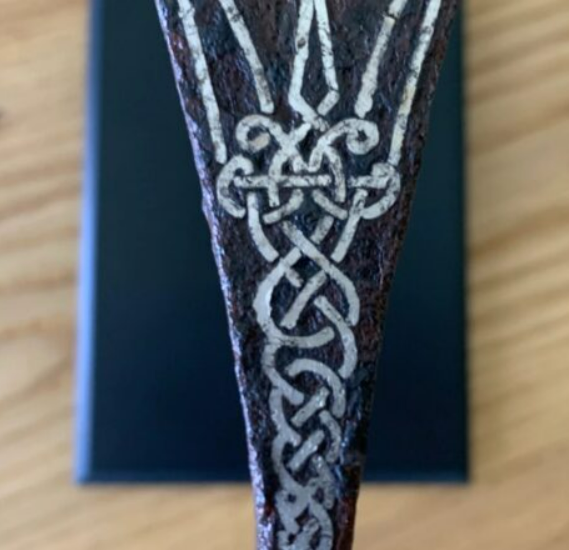
The battle axe in the title image of the article was discovered near Chernihiv in Ukraine. It was purchased by a private citizen and presented to the National Museum of History of Ukraine.

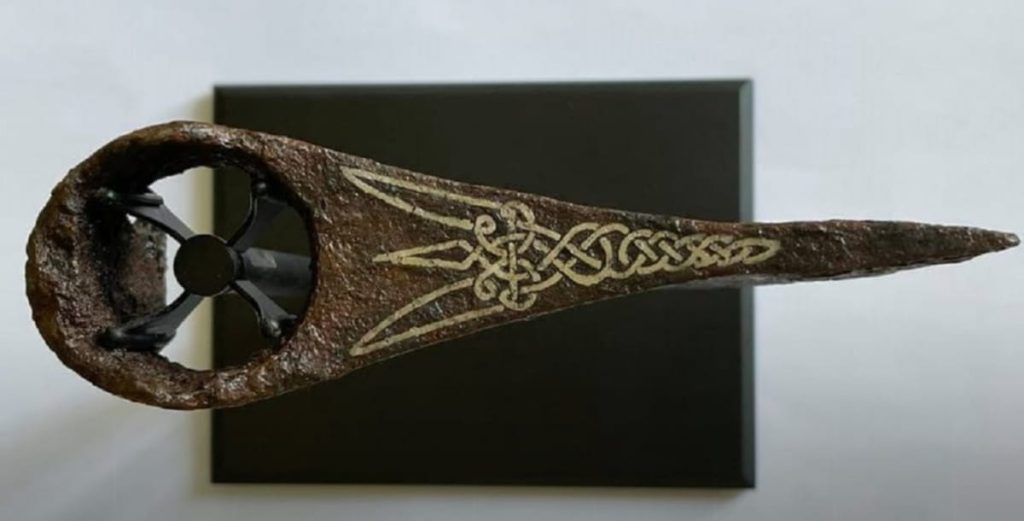

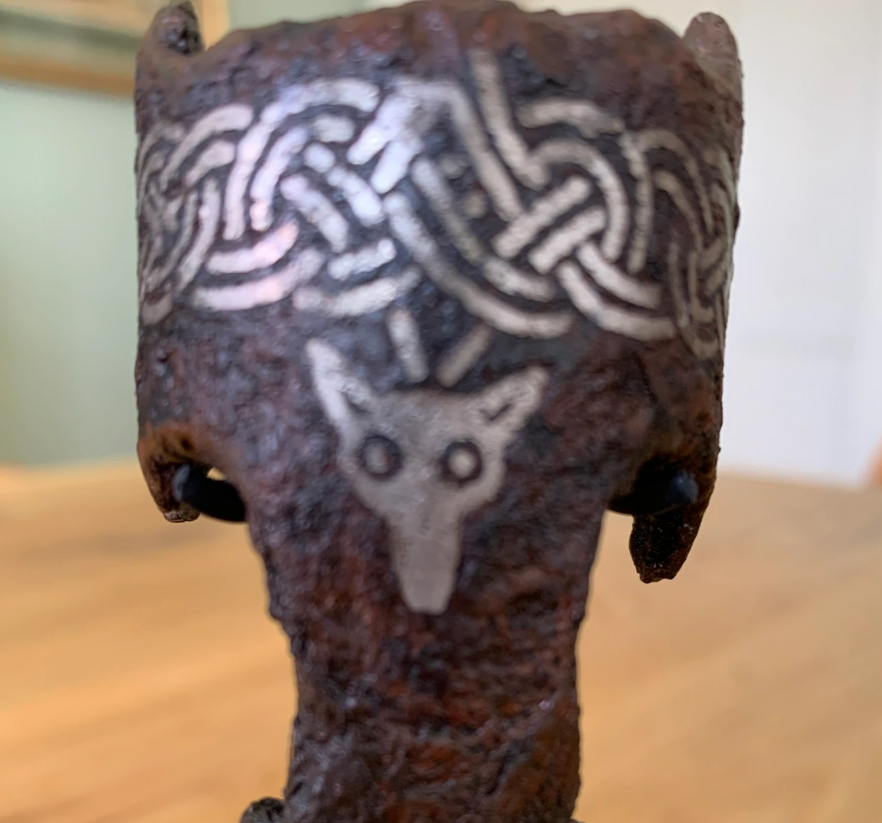
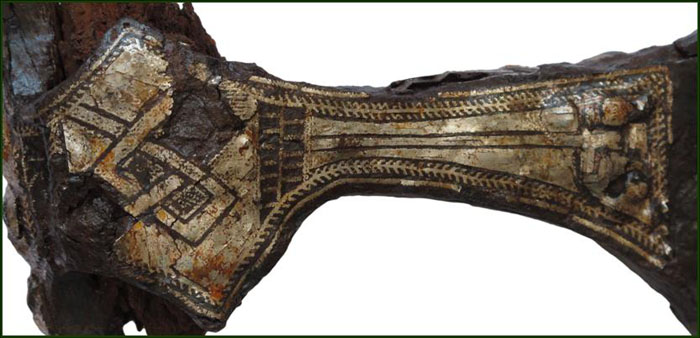
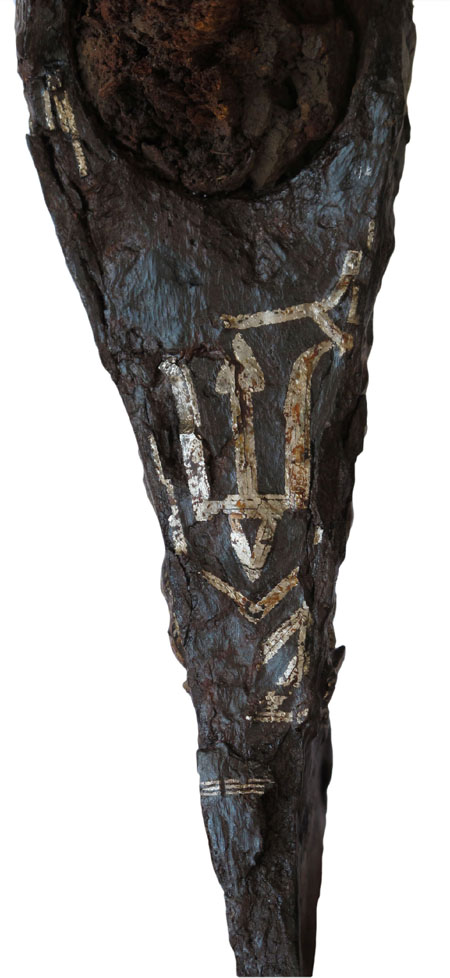
According to the words of the director of the National Museum of History of Ukraine, Fyodor Androshchuk, the gift of the Lviv citizen belongs to the rare group of inlaid battle axes of the X-XIII century. But the scientist emphasises that the inlay with a trident, the iconography of which dates back to the reign of Volodymir the Great, indicates that the axe dates back to the 10th-11th centuries.
Read about B. Rybakov and his other conclusions:
Chainmail Armor of Kyiv Rus: Ahead of Western Europe and Vikings by centuries >
“Kyiv Rus in Heimskringla Sagas and Byzantine Texts” has little-known facts about the interaction of Kyiv and Scandinavian rulers.
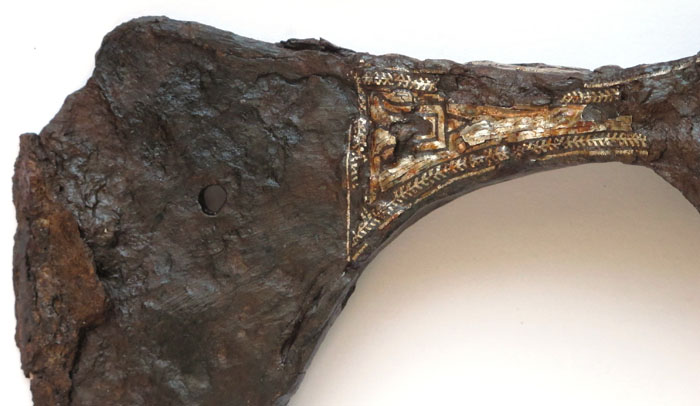
In 2011, a similar axe was discovered in a medieval burial ground near the village of Shekshovo in the Suzdal region. The hatchet (weight about 240 g, blade length 13.5 cm, width 9.4 cm) belongs to the widely known type of “axes with a carved butt”. It differs from standard hatchets of this type by the silver decoration covering the neck and the butt; on the end of the butt, the ornament is made by inlaying silver onto iron, and on the side edges – by plating (a silver plate is placed on the iron, on which a design was previously cut). In addition to the ornamental figures, on one of the side faces of the axe, there is an image of a straight-pointed cross with a long lower blade, on the other – an image of a bident with a triangular protrusion at the base and outward-facing teeth (the symbol of Sviatoslav the Brave of Kyiv). At the end of the neck, there is an image of a trident with a triangle at the base – the signs of the princes Volodymir the Great, son of Svyatoslav, and Yaroslav the Wise, son of Volodymir.