“Where can we look for the most ancient references to our Rus, that is, to the Rus’ people?
We will not discuss the Biblical people of Ros; instead, we will move directly to the accounts of the Greco-Roman writers about the Roxolani. In our opinion, there can be no doubt that Ros or Rus’ and the Roxolani are one and the same name, one and the same people.
Roxalany was pronounced differently as Rossalany (just as the Poles say Sasy instead of Saks; similarly, Polesie in Latin transmission turned into Polexia, for example, in the bull of Pope Alexander IV).
This name is complex, like Tauroscythians, Celtiberians, and so on. It refers to the Alans who lived along the Roxus (Araxes) or Ross River. They first appear under this name at the beginning of the first century BC, specifically in their war with Mithridates of Pontus (according to Strabo and Pliny).
Tacitus calls them the Sarmatian people. Greco-Roman writers place their settlements near the Black and Azov Seas between the Don and Dnieper rivers. Subsequently, they (or at least some of their branches) are found further west, and their raids harass the Roman territories on the Danube.
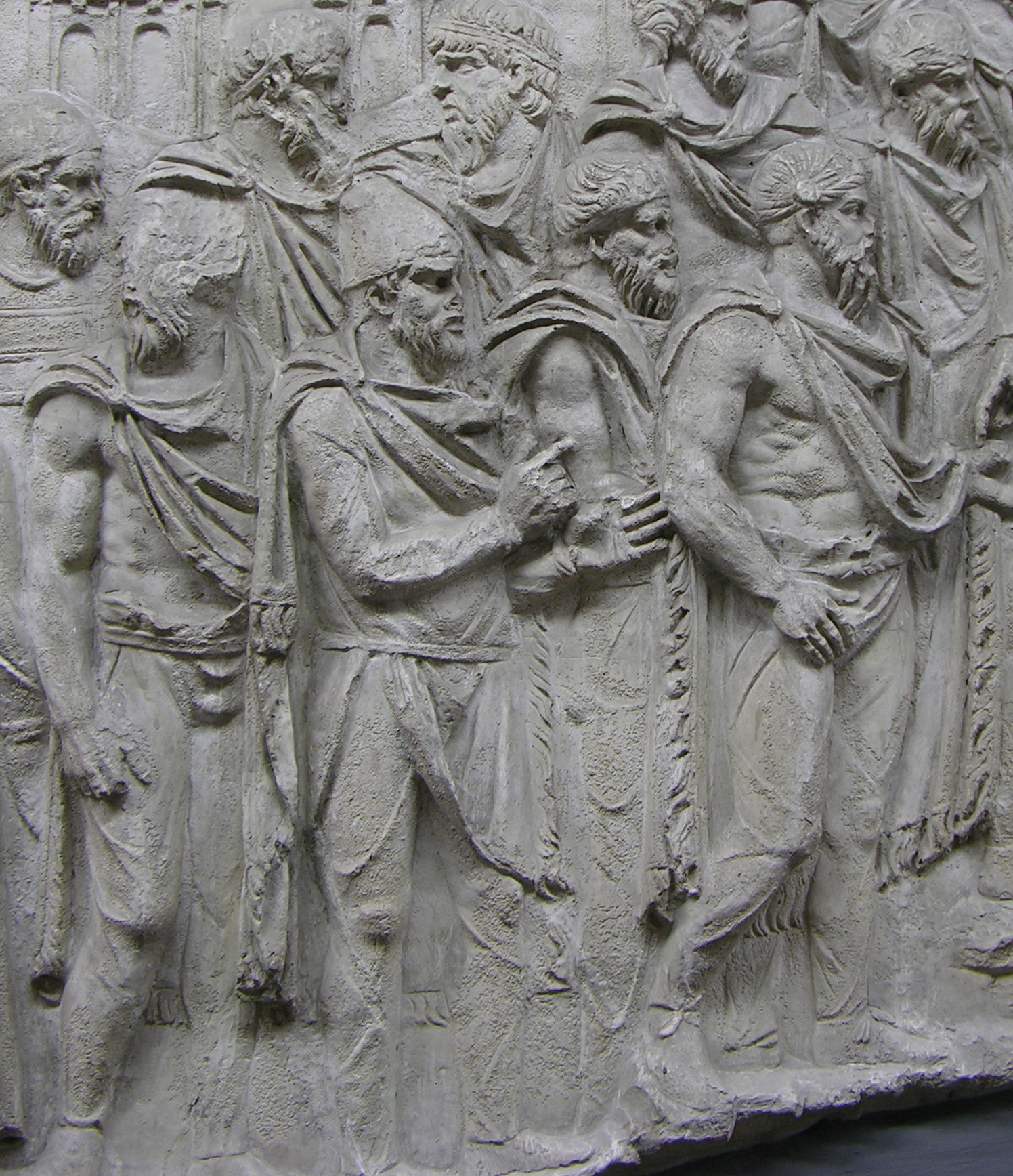
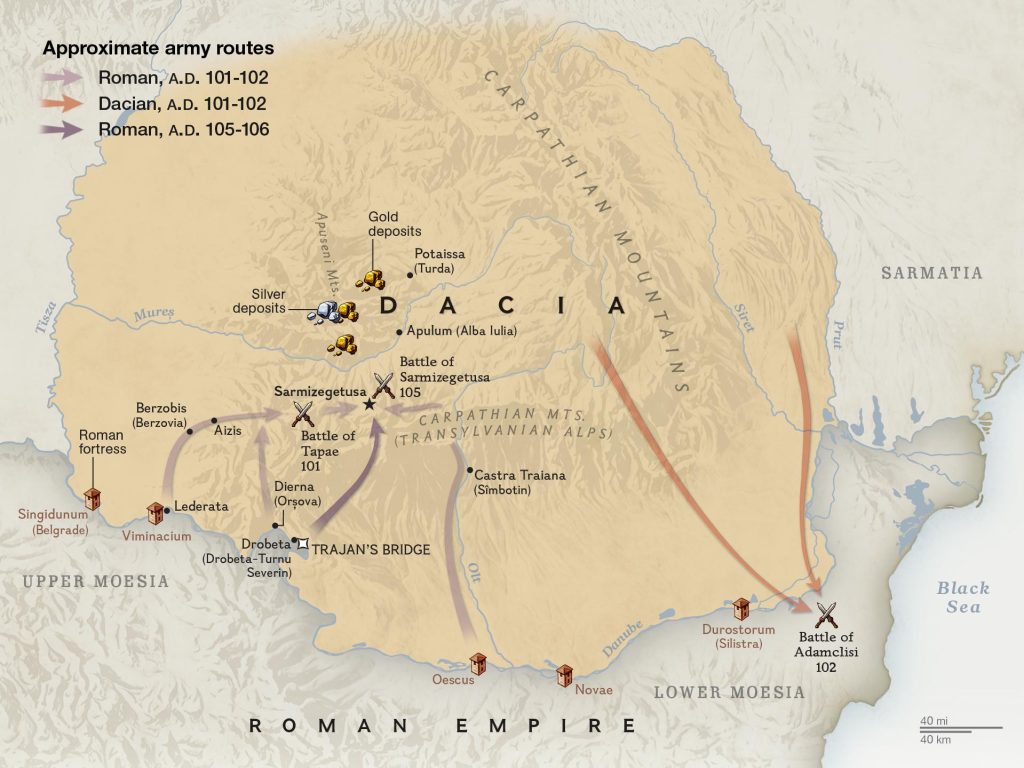
During Trajan’s wars with the Dacians, the Sarmatian Roxalani took part in these conflicts and for a time were allies of the Dacians. Having conquered Dacia, the Romans apparently pushed the Roxolani back to the banks of the Dniester and Dnieper rivers.
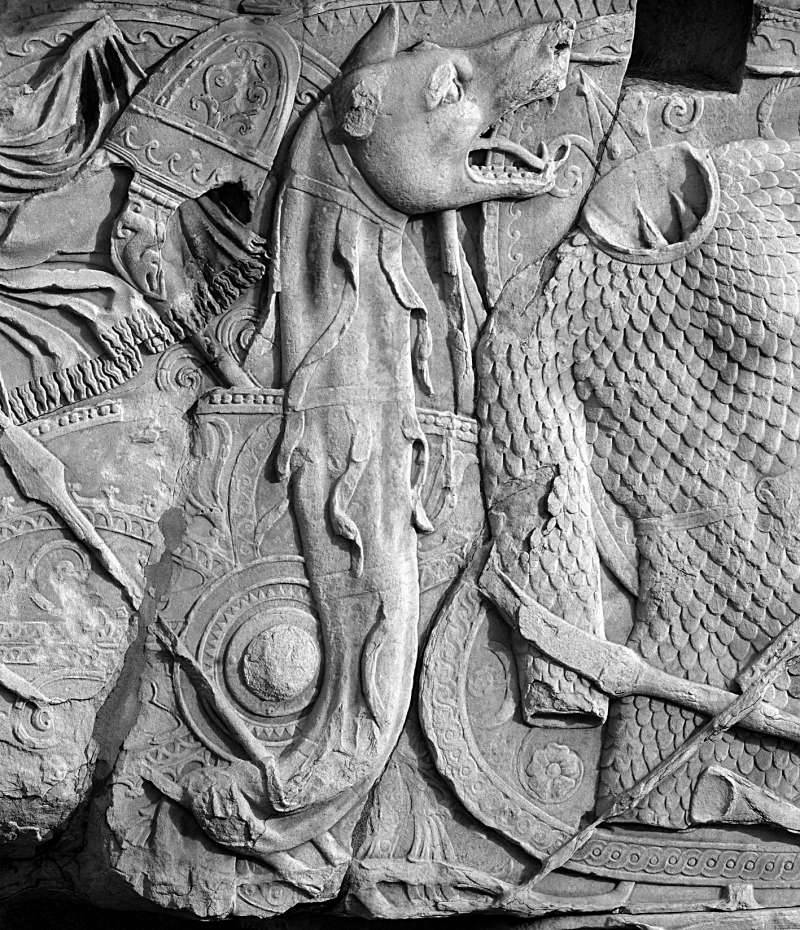
Ammianus Marcellinus, reporting some characteristics of the Sarmatians, says that they were armed with long spears and wore linen cuirasses covered with horny scales, which were made like bird feathers.
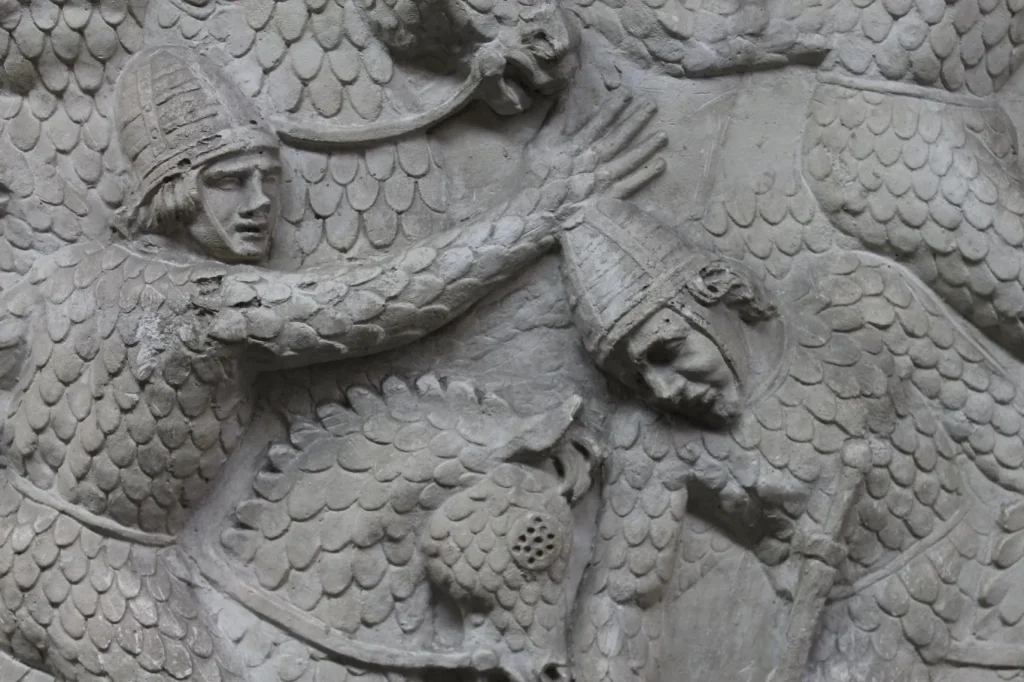
On the famous monument of the Dacian War, Trajan’s Column, we see horsemen covered in precisely this type of scale armor. These horsemen are not Dacians, but their allies, the Sarmatians.
(Do these figures depict our ancestors, the Roxolani, or the Rus’ of the 2nd century AD?) According to Tacitus, noble Roxolani wore scaly armor made of iron plates. It is certainly no coincidence that the name of Trajan lived so long in the legends of the Rus’ people that we encounter it in our 12th-century poet, i.e., in The Song of Igor’s Campaign.
It was no accident that the so-called Trajan’s Earthern Walls were erected to protect against the warlike peoples of Southern Rus, including, incidentally, the Roxolani. (According to historian Jordanes, in the sixth century, Dacia bordered the Roxolani to the east).”
[Dmitry Ilovaysky (1832-1920) was a renowned Russian historian. He first published his book Research on the Beginning of Rus in 1876, with several more editions following up until 1890. The book was republished in 2001.]
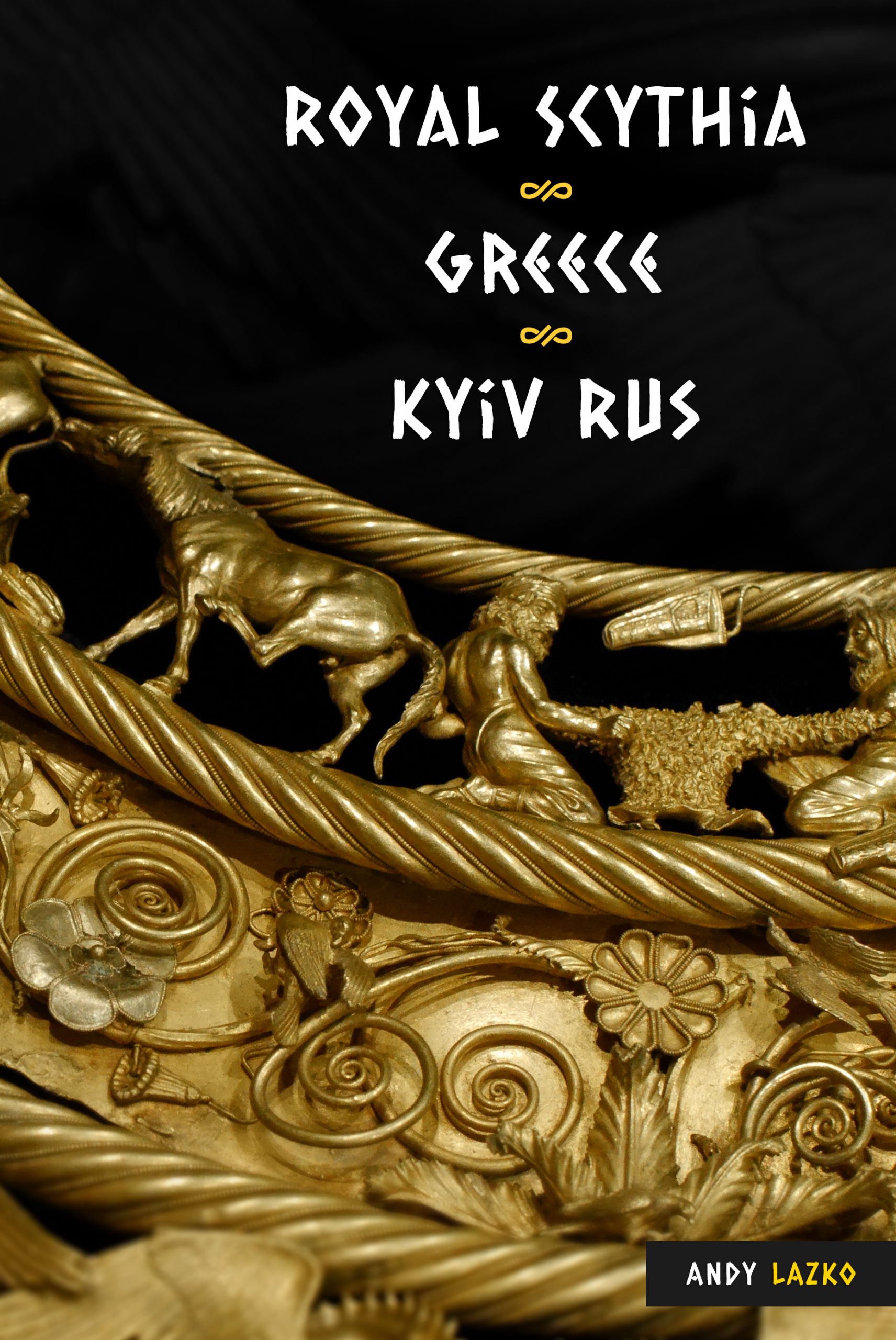
“Royal Scythia, Greece, Kyiv Rus” book describes the wars of Mithridates mentioned in the text above. It also has the observations of Roman poet Ovid, who lived in Dacia, on what kind of people populated the country.
Trajan’s Walls, named after the Emperor Trajan, were huge earthen fortifications built by the Romans in order to resist the offense of the Sarmatians and their allies, the Slavs. Remnants of these walls are still preserved in the territory of Odesa, Ternopil, and Khmelnytsky oblasts in Ukraine.
Ilovaysky was most likely correct about Roxolani being Rus. The etymology of the name Roxolani may be worth reconsidering. They could have been a part of the Royal Scythians.
The author of this article thinks that the first part of the name Roxolani, Rox-, may well be a cognate of the title Rex. Actually, the latter, Rex, most probably derived from the former for the reason that, as has been recently established, the Proto-Indo-European language originated in the area of what is now Ukraine.
The very idea that the Roxolani were Royal Alani could explain why Leo the Deacon mentioned the royal ancestry of Sviatoslav the Brave of Kyiv. It would also explain why European Royal dynasties were so eager to marry Kyiv Rus rulers.
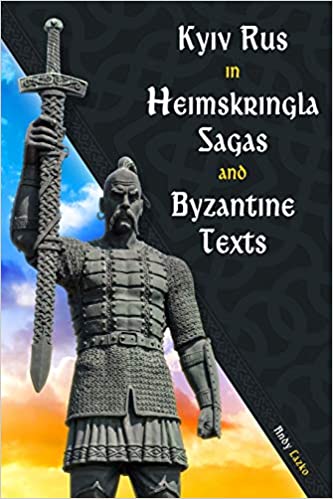
The book “Kyiv Rus in Heimskringla Sagas and Byzantine Texts” has little-known details of the marriage of Yaroslav the Wise with a Swedish princess. Also, of how his two daughters became the Queens of France and Norway.
Kyiv Rus were Hyperborean Tauro-Scythians, – 12th-century Byzantine historian Niketas Choniates >