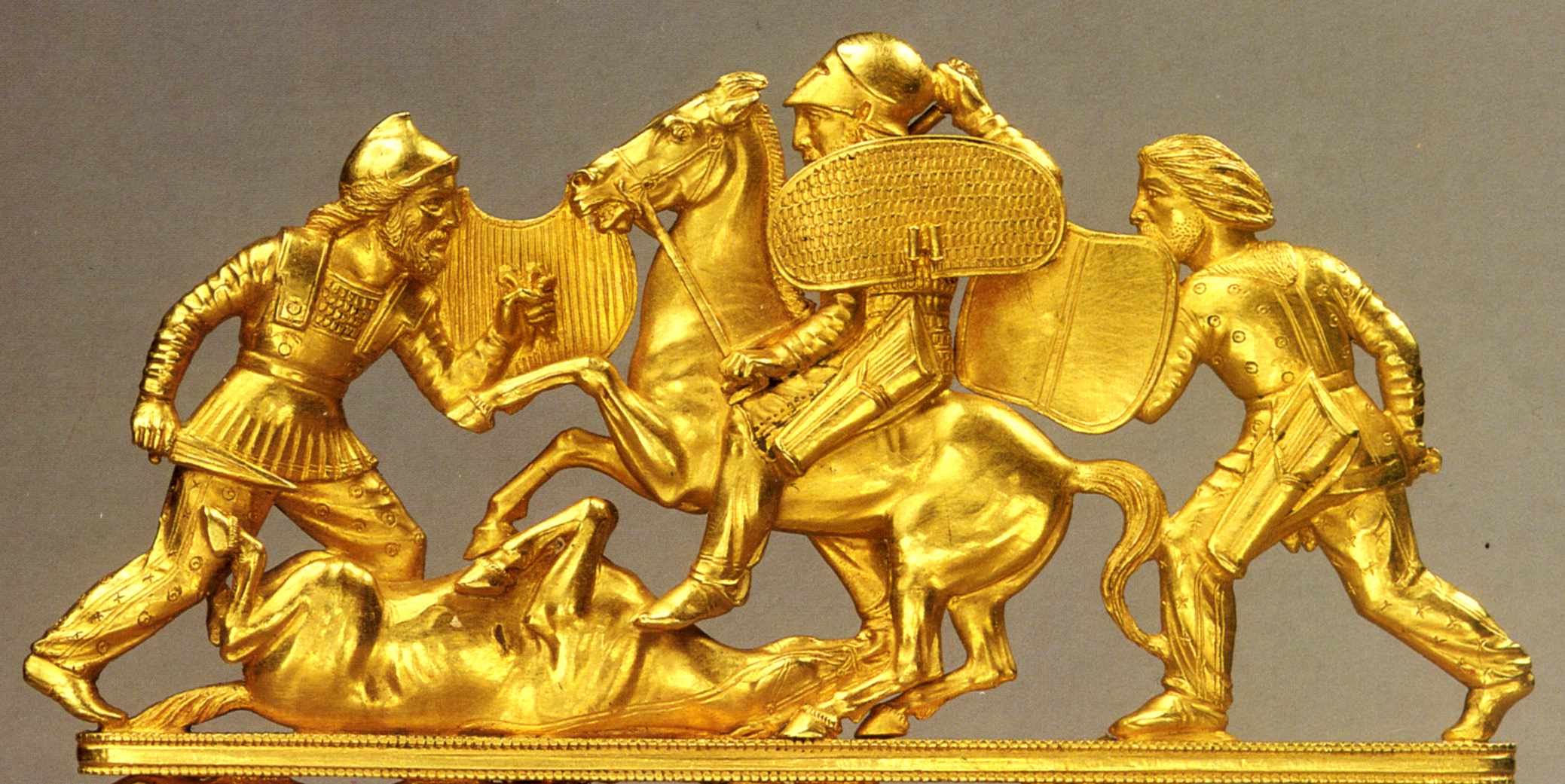
A true masterpiece of Scythian metalwork, an extraordinary Gold Comb crested with fighting Scythians was discovered in the Solokha Royal Kurgan in the Zaporizhzhia region of Ukraine, on the left bank of the Dnieper River, in 1913.
The 18 meters-high mound was among the largest, indicating the burial place of Scythian nobility of the highest rank. The excavations started in 1912, but the central burial chamber under the mound turned out to have been ransacked in much earlier times.
The next year, near the edge of the mound, the archaeologists uncovered another chamber, which robbers had missed. It had three compartments. The owner of the tomb was buried in one of them, and the other two chambers contained an enormous number of gold and silver objects, magnificent examples of ancient art.
It became obvious that either a Scythian king or a Scythian war-lord of the highest rank was buried in the chamber. Silver vessels stood all around, and near the skeleton lay an iron sword in a wooden sheath, both covered with gold. On his head was a bronze helmet of Corinthian type. The extraordinary gold comb that is rightly considered a masterpiece lay to the right side of the head.
Made at the beginning of the 4th century B.C., it is the only relic of antique jewelry of its kind. The gold comb from the Solokha mound is 12.3 cm high and weighs 294.1 grams of pure gold. The comb has nineteen tetrahedral teeth, above which runs a frieze formed by the figures of reclining lions.
The frieze is surmounted by a sculptural group: a horseman, accompanied by a lightly armed foot-soldier, is repelling the attacks of his enemy in a pointed Thracian helmet, who has dismounted as a result of an accident. His wounded horse is fighting in its death throes, and blood is pouring from a deep neck wound. The outward appearance of the Scythian warriors, their clothes, and their weapons are reproduced with a documentary-like accuracy.
The archaeologists observed that the bronze helmet found on the head of the Scythian warlord buried in SOLOKHA kurgan resembled the helmet on the head of the horse rider on the Solokha comb. A short-sleeved tunic covered with iron scales resembling the one on the horse rider was found at the entrance to the chamber. There were also bronze grieves nearby.
Adding to these three coincidences, plus the fact that the comb was placed near the head of the deceased, it seems logical to conjecture that it was most likely the very Scythian warlord represented as the horse rider on the comb who was buried in the second Solokha chamber.
The comb is currently in the Hermitage, but Ukraine is planning to return it to Kyiv.
More about Solokha Kurgan and other artifacts discovered in it – in the next videos.
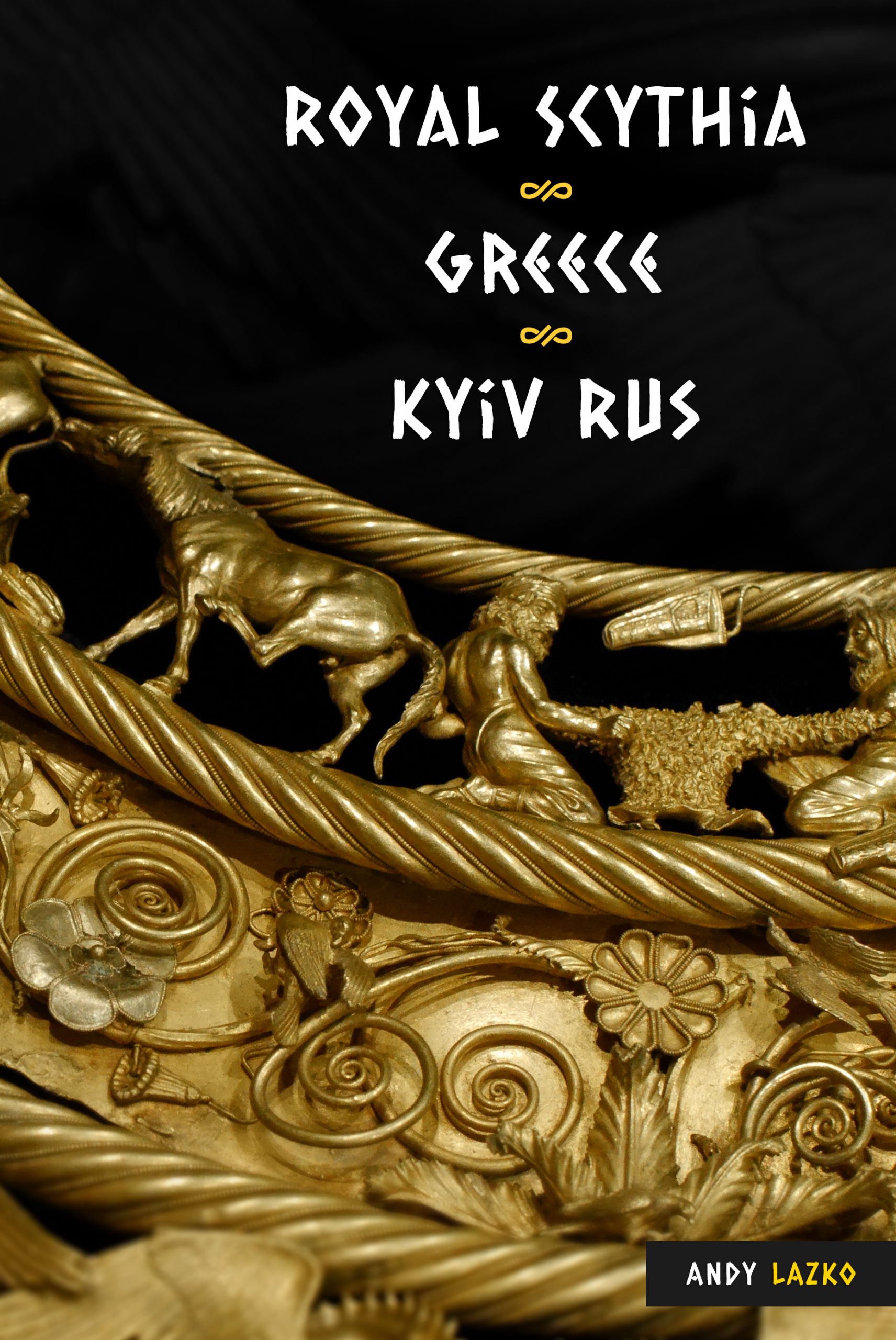
Meanwhile, the book ‘Royal Scythia, Greece, Kyiv Rus’ offers little-known information about other famous kurgans discovered in Ukraine.