The Solokha barrow, on the left bank of the Dnieper River, not far from the city of Nikopol in central Ukraine, was excavated in the years 1912-13. The barrow had an embankment eighteen meters high (58.5 ft.) and concealed two vaults. The first vault, in which a woman of high birth was buried, had been plundered a long time ago and all that was left were the remains of two horses in rich attire, old dress ornaments, a gold needle, and two vessels – one silver, the other bronze.
The second vault contained the body of a chief, his weapon-bearer, a servant, five horses, and a stableman. The head of the dead chief was covered with a heavy bronze helmet; gold rings and bracelets adorned his arms, and around his neck was a gold, crescent-shaped ornament (gryvna).
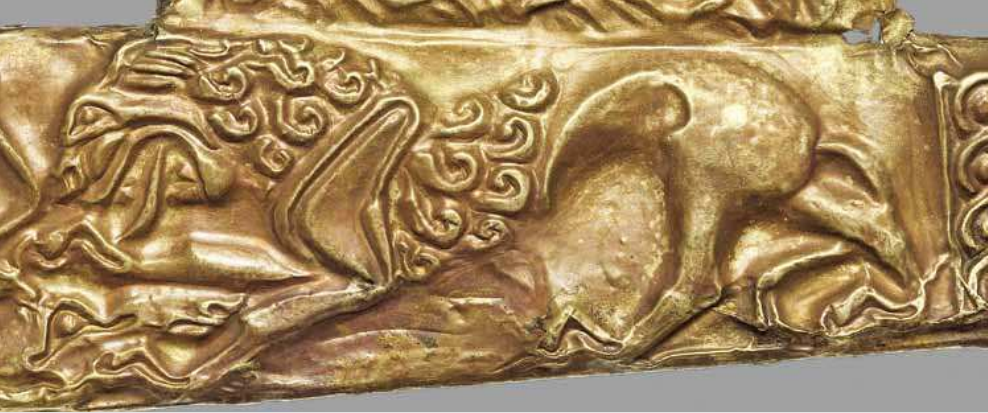
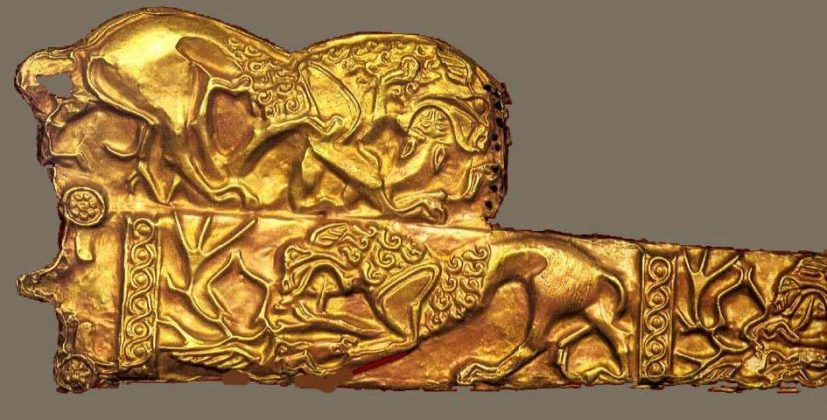
On his right-hand side lay his ceremonial sword in a wooden scabbard covered with elaborate repoussé-decorated gold sheeting, with a second sword placed next to it.
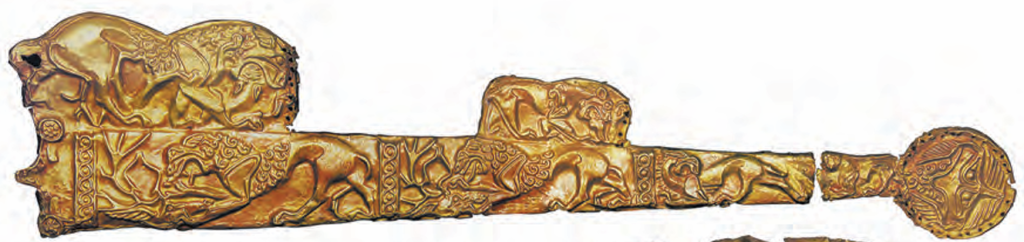
This classic item, derived from the side burial of the Solokha barrow, is dated to the boundary of the 5th – 4th c. B.C.
The swords with similar openwork zoomorphic pommels were named the ‘Solokha type’ swords.
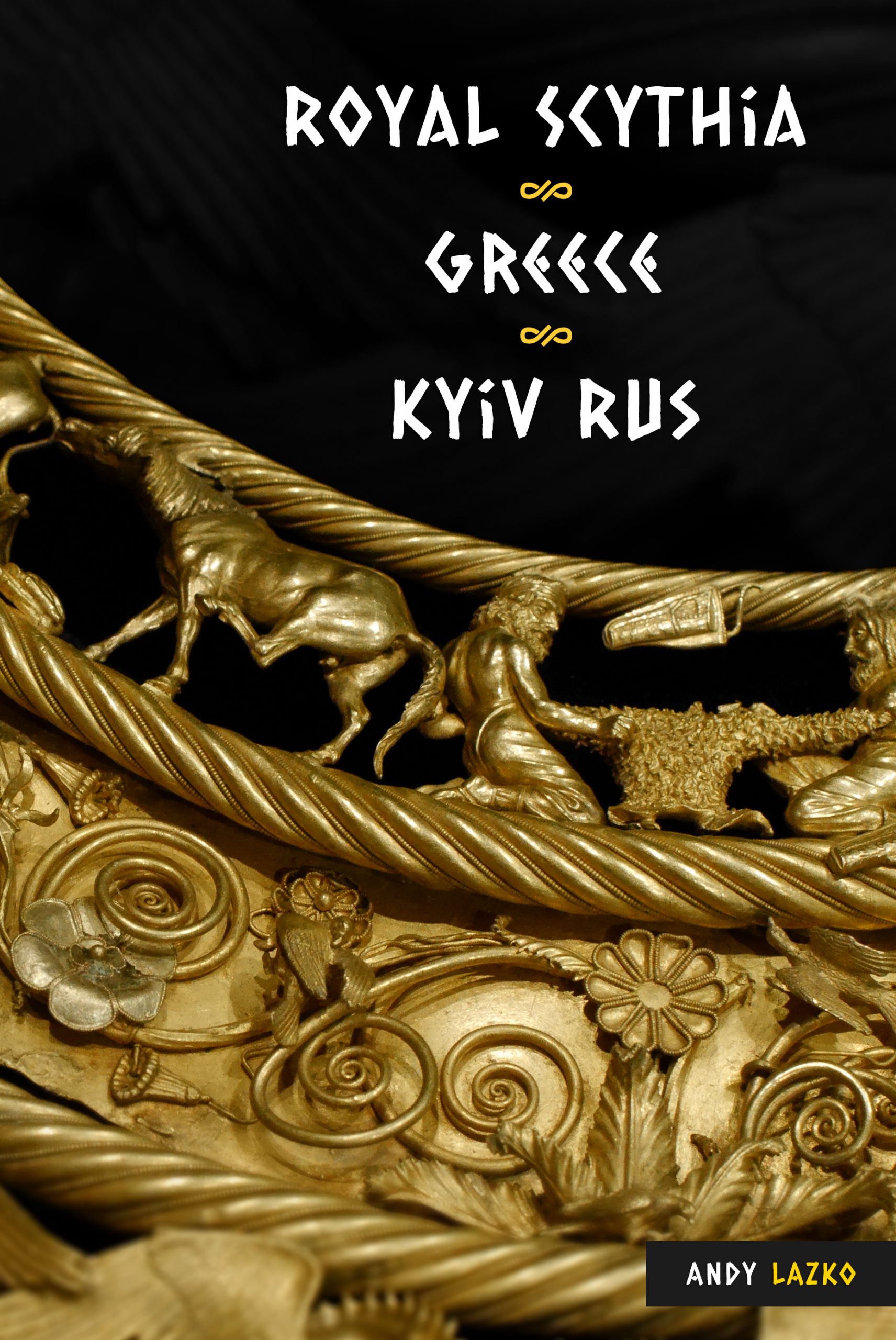
The book “Royal Scythia, Greece, Kyiv Rus” book takes a new perspective on Scythian culture that flourished in the area of what is now Ukraine.