According to the Early Slavs – Wikipedia page,
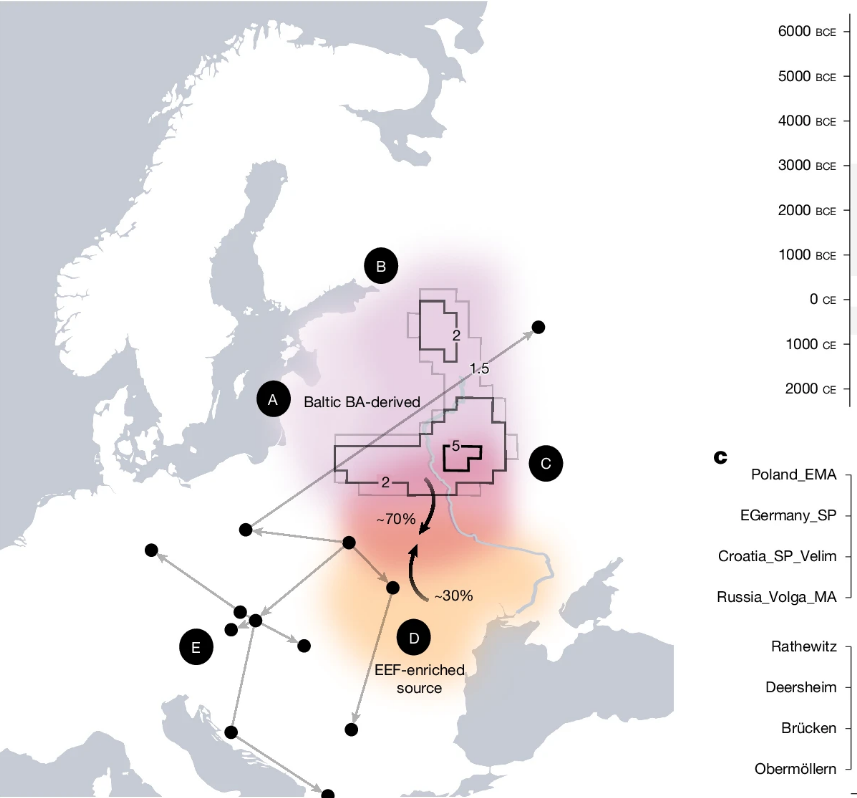
“A 2025 comprehensive archaeogenetic study published in Nature on 555 samples out of which 359 from the Slavic period, “demonstrate large-scale population movement from Eastern Europe during the sixth to eighth centuries, replacing more than 80% of the local gene pool in Eastern Germany, Poland and Croatia” and that “on the European scale, it appears plausible that the changes in material culture and language between the sixth and eighth centuries were connected to these large-scale population movements”. Also, was considered that the “best spatial proxy” of the Slavic Urheimat was in the south of Belarus and north of Ukraine, also indicative of the Kyiv culture.
Appearance
In the Chronica Slavorum, Helmold writes on the Wends: “These men have blue eyes, ruddy faces, and long hair”. Ibrahim ibn Yaqub mentioned that the Slavs were bearded. Procopius wrote that the Slavs “are all tall and especially strong, their skin is not very white, and their hair is neither blond nor black, but all have reddish hair“. Jordanes wrote that “…all of them are tall and very strong… their skin and hair are neither very dark nor light, but are ruddy of face”. Ibrahim Ibn Ya’qub wrote: “They wear ample robes, although the ends of their sleeves are narrow”. Procopious wrote that the men also wear a kind of breeches pulled up to the waist. Procopius wrote that Slavic warriors were armed with spears, without armour, carrying small light shields, and went almost naked into battle. Similarly, Tacitus describing the Germanic warriors stated that they all carried short spears, rarely swords, and were scarcely dressed, going almost naked.
Theophylact Simocatta wrote about the Slavs that “the Emperor was with great curiosity listening to stories about this tribe, he has welcomed these newcomers from the land of barbarians, and after being amazed by their height and mighty stature, he sent these men to Heraclea”. Hisham ibn al-Kalbi described the Slavs as “…a numerous nation, fair-haired and of ruddy complexion”, and Al-Baladuri made reference to the Slavs, writing “If the Prince so willed, outside of his doors would be black Sudanians or ruddy Slavs.”
According to the DNA data above, the Ukrainians, Belarusians, Croats, Poles, and Eastern Germans are branches of a single ethnic group. ‘Brotherly nations’, as some would say.
What about the future Muscovites-‘Russians‘? Were they Slavs?
Anthropology of Indigenous ‘Russians’: A. Uvarov’s excavations of Meryan settlements near Moscow >
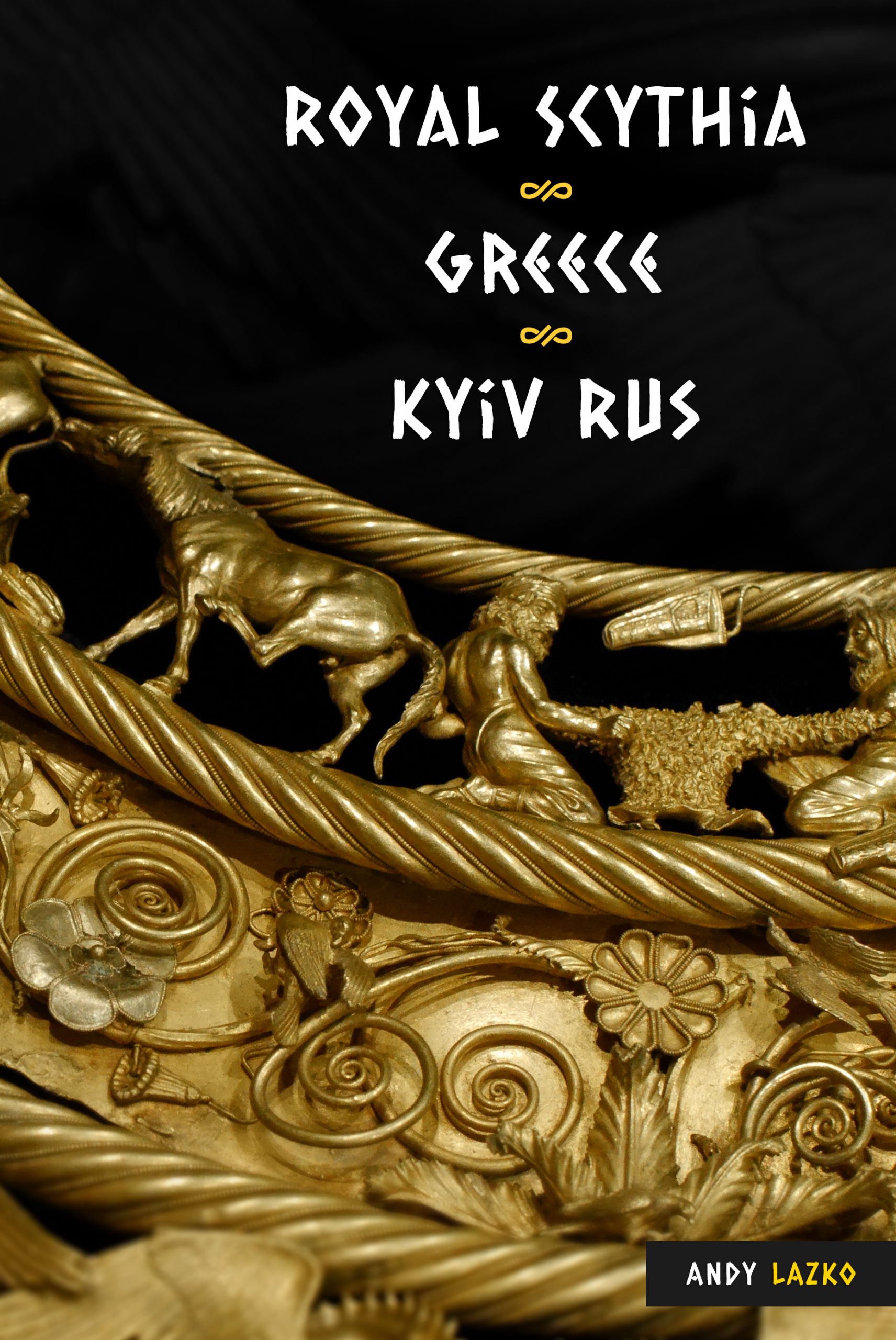
‘Kyiv Rus in Heimskringla Sagas and Byzantine Texts‘ offers new facts and perspective on origin of the Rus’ state.