Scythian Poison Arrows
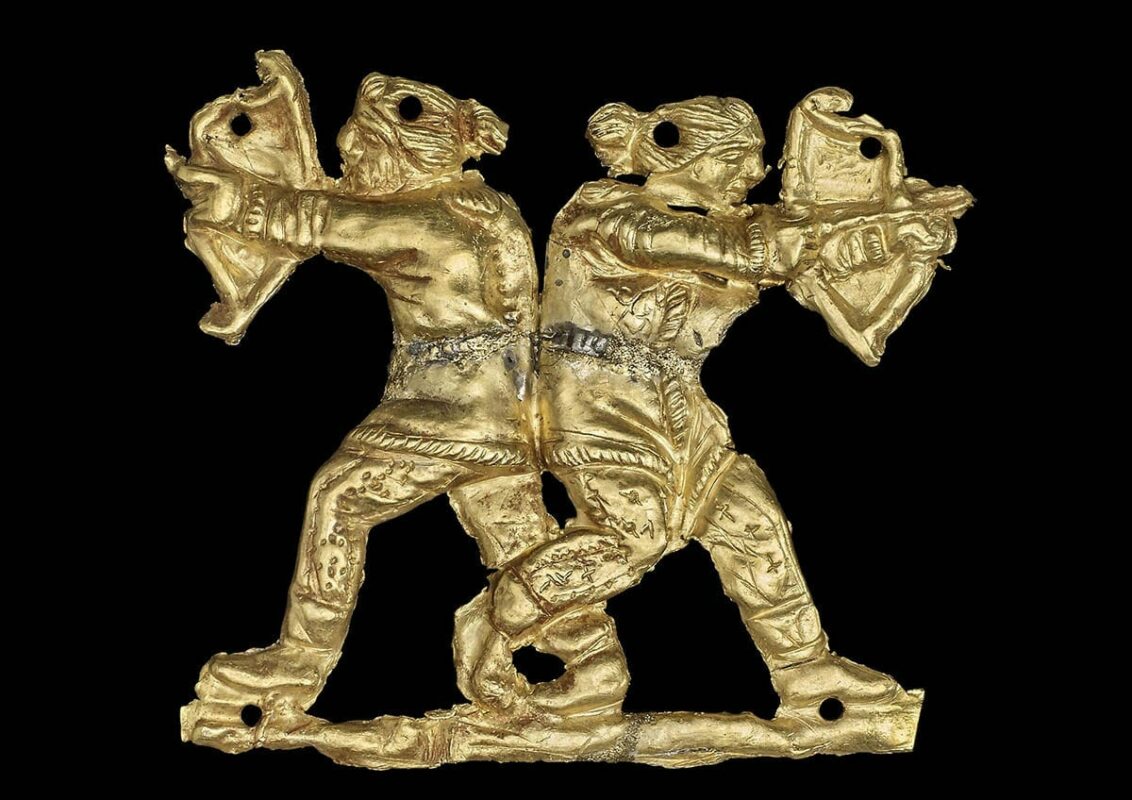
The Scythians were famous for their deadly composite bows. They smeared their arrowheads with poison to make each of their successful shots lethal.
On Marvelous Things Heard, formerly attributed to Aristotle, is the earliest known record of Scythian poison composition:
“They say that they make the Scythian poison with which they smear arrows, out of the snake. Apparently the Scythians watch for those that have just borne young, and taking them let them rot for some days. When they think that they are completely decomposed, they pour a man’s blood into a small vessel, and dig it into a dunghill, and cover it up. When this has also decomposed, they mix the part which stands on the blood, which is watery, with the juice of the snake, and so make a deadly poison.”
Ovid
Famous Roman poet Ovid lived in exile in what is now Romania at the very beginning of the first century AD.
In his Tristia, he wrote that when the Danube River froze, the Scythians could cross and lay waste to the new Roman province.
Ovid witnessed how people died in torments, pierced by barbed arrows, because on the winged steel there was a poison in which the arrow had been dipped.
In another passage, he compared the Scythians to the ravening wolf that drags and carries along some sheep, because the Scythians took captive anyone they could find in that area. “The person so taken either follows them, and has chains thrown over his neck, or is killed with a weapon dipped in poison”.
Ovid even provided a technical detail that the Scythians hurled poison beneath the barbed steel.
Blood-Plasma Separating Technique
Another Roman author, Aelian, provides very interesting information about another Scythian poison.
In the third century AD, Aelian references the Greek naturalist Theoprastus, who flourished in the third century BC, or half a millennium earlier.
“The Scythians are even said to mix serum from the human body with the poison that they smear upon their arrows to drug them. This serum somehow floats on the surface of the blood, and they know a means of separating it. Theophrastus is a sufficient witness to the fact.” (Claudius Aelianus, De Natura Animalium 9.15).
Serum is blood plasma, and obtaining it even nowadays is a complicated process that includes coagulation and centrifuging.
But Aelian writes that Theophrastus witnessed this process conducted by the Scythians in the third century BC already! Theophrastus is considered the Father of Botany, so he should be accepted as a reliable witness.
Amazingly, Scythians possessed a remarkable forerunner of modern blood-plasma separating technology, but unfortunately the description of the technique is lost.
Scythicon, Toxikon
The legendary ancient arrow poison used by the Scythians was called Scythicon.
According to etymologists, Scythicon also gave rise to the Greek word toxikon, which actually means arrow poison. The modern word toxin derives from toxicon.
National Geographic magazine states that Scythians, as some of the most dreaded biological warriors of antiquity, were even the inspiration for several Greek myths.
Heracles & Biological Weapon
Of particular interest in this regard is the second labor of Heracles.
The labor involved slaying the many-headed snake known as the Lernaen Hydra.
After Heracles managed to kill the hydra, he dipped his arrows in the Hydra’s poisonous blood. Later, Heracles used one of his poisonous arrows to kill the centaur Nessus.
Heracles’ killing of the centaur with a poisonous arrow is considered the first recorded use of a biological weapon.
Scythians, Sons of Heracles
Although it is a myth, it may have had a real-life inspiration, as mentioned earlier.
Curiously, the Greeks themselves viewed the Scythians as the direct descendants of Heracles.
Herodotus writes that Greeks living in colonies to the north of the Black Sea told him the following legend.
According to them, Heracles came to that land before the Scythians inhabited it.
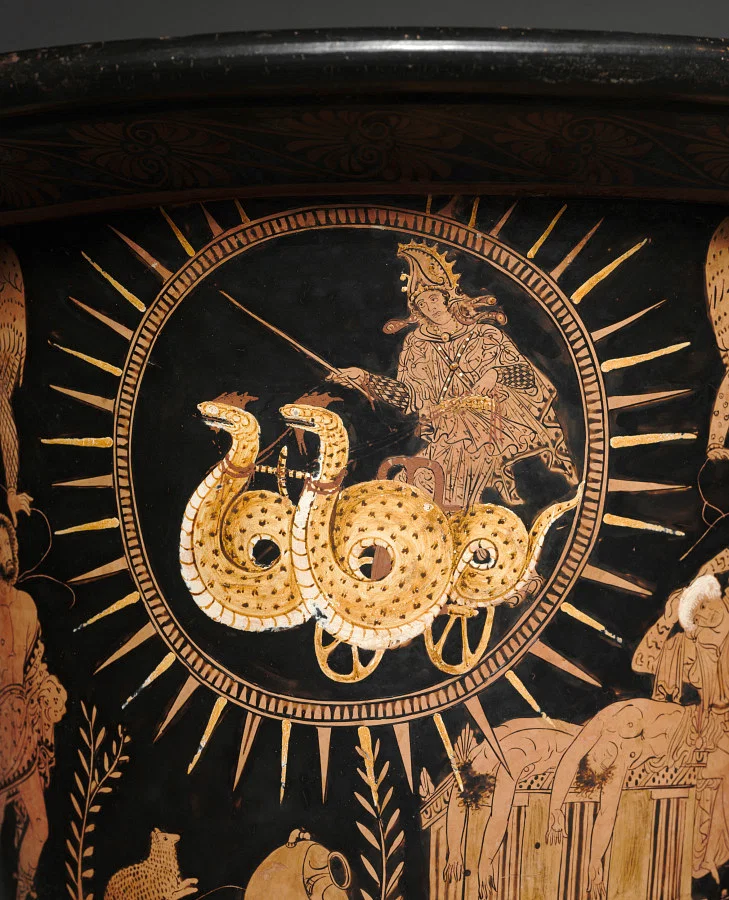
There, he met a creature half girl, half viper, with whom he fathered three sons.
Before leaving, Heracles left his bow and the task of stringing that bow for the boys when they grew up.
Only the youngest son, whose name was Scythes, managed to string the bow of Heracles.
Because of it, he inherited the land, and his two elder brothers had to migrate to other places.
The descendants of Scythes, the youngest son of Heracles, were called Scythians, and they became successors of that land after him.
Is it possible that the Scythians were the ones who inspired the myth about Heracles, Hydra, and poison arrows?
Birthplace of Scythian Nation, Hylaia
It is crucial to determine the land where Heracles met the snake goddess. The land where three of his sons were born.
The land they had to compete for.
The prized land of the true Scythians. In short, the legendary birthplace of the Scythian nation.
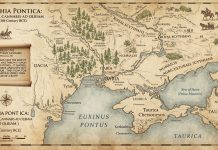
Herodotus wrote that Heracles met the snake goddess in the area called Hylaia.
Here is that land on the map.
In the 5th century BC, Herodotus described this area as Old Scythia and the abode of the Royal Scythians.
There is a video with details of the borders of Scythia in that period according to Herodotus.
The book “Royal Scythia, Greece, Kyiv Rus” offers another example of the Scythians’ remarkable medical advances of the period. It has the story of the Scythians’ healing of the famous king Mithridates VI.
The book “Cradle of Civilizations” takes a closer look at other famous myths about poisons, including the one about princess Medea and the Argonauts.